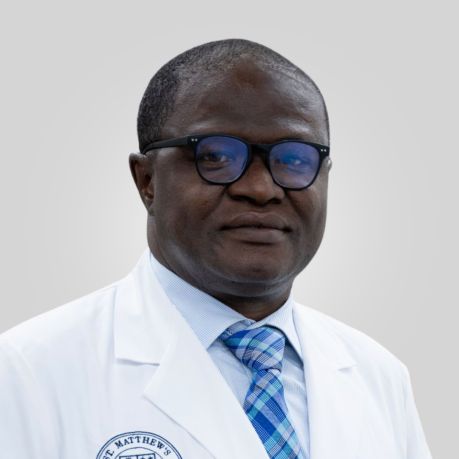
Dinipre McGregor Barakemi Youdubagha
Assistant Professor of Histology & Cell Biology
Qualifications: MD, MSc School/Division: School of Medicine Courses: Histology, Genetics, FOCM
Get to know SMUSOM at an upcoming event!
Read about the achievements of our Faculty Member
Dr. Youdubagha is a dedicated biomedical science educator with over 15 years of experience teaching across medical, pharmacy, and nursing programs. With a strong foundation in Histology, cell and molecular biology, genetics, gross anatomy, and embryology, Dr. Youdubagha has consistently contributed to shaping future healthcare professionals through engaging, interdisciplinary, and clinically relevant instruction.
Throughout his academic career, Dr. Youdubagha has been recognized for a dynamic teaching approach that bridges complex scientific theory with real-world clinical application. His professional interests lie in the molecular mechanisms of disease, developmental biology, and anatomical sciences, with a focus on fostering critical thinking and integrative learning among students.
Dr. Youdubagha is passionate about academic mentorship, curriculum development, and contributing to quality education in the biomedical sciences. He continue to stay actively engaged in both teaching and curriculum innovation, supporting student success and evidence-based learning across health disciplines.
I am an experienced biomedical educator with over 15 years of teaching in the health sciences, working with students in medicine, pharmacy, and nursing. My core areas of expertise include Histology and cell Biology and molecular biology, genetics, gross anatomy, and embryology. I specialize in delivering complex scientific concepts in a clear, clinically relevant manner to support the foundational learning of future healthcare professionals.
I also specialize in mentoring students for the USMLE Step 1 examinations, providing targeted preparation.
My teaching and academic interests focus on the molecular mechanisms of health and disease, genetic regulation, developmental biology, and human anatomical structure and function. I am committed to fostering critical thinking, interdisciplinary integration, and active learning strategies that bridge basic science with clinical application.
My research interests center on the fields of cell and molecular biology, genetics, and neuroscience, with a particular focus on understanding the molecular basis of human development and disease.
I am especially interested in how genetic and epigenetic mechanisms regulate cell function, how disruptions in these processes contribute to disease, and how molecular pathways guide embryonic development and neural differentiation. I am also curious about how these biological systems interact in the context of neurodegenerative and inherited disorders.
Although I have not yet published, I am eager to engage in collaborative research that explores gene regulation, molecular signalling, and neural plasticity. I am particularly drawn to projects that bridge basic science with clinical relevance and contribute to advancing biomedical education and translational health research.
My research interests lie at the intersection of cell and molecular biology, genetics, and neuroscience, with a focus on understanding the molecular and cellular mechanisms that underlie human development, disease, and neural function.
In cell and molecular biology, I am particularly interested in the regulation of gene expression, signal transduction pathways, and cellular responses to physiological and pathological stimuli. I explore how disruptions in these fundamental processes contribute to disease states, including cancer, metabolic disorders, and neurodegenerative conditions.
In genetics, my work focuses on the role of genetic and epigenetic factors in health and disease. I am especially interested in how gene-environment interactions influence developmental pathways and contribute to inherited and complex disorders. This includes investigating the mechanisms of genetic regulation during early embryogenesis and the implications of genomic variation on personalized medicine.
In the area of neuroscience, I am drawn to the molecular basis of neural development and plasticity, with an emphasis on how genetic and cellular factors influence brain function and behavior. My interest extends to neurogenetics, synaptic biology, and the molecular pathology of neurological diseases such as Alzheimer’s, Parkinson’s, and neurodevelopmental disorders.
Overall, my research is driven by a commitment to uncovering the molecular foundations of life and disease, with the goal of translating these insights into improved diagnostics, therapies, and educational approaches for future healthcare professionals.
St. Matthew's curriculum was designed by U.S.-based faculty and parallels training at top U.S. medical schools. It involves ten semesters of concentrated academic and clinical study split between Basic Sciences and Clinical Sciences.